
How to Increase Average Order Value with Shopify Upsell Strategies
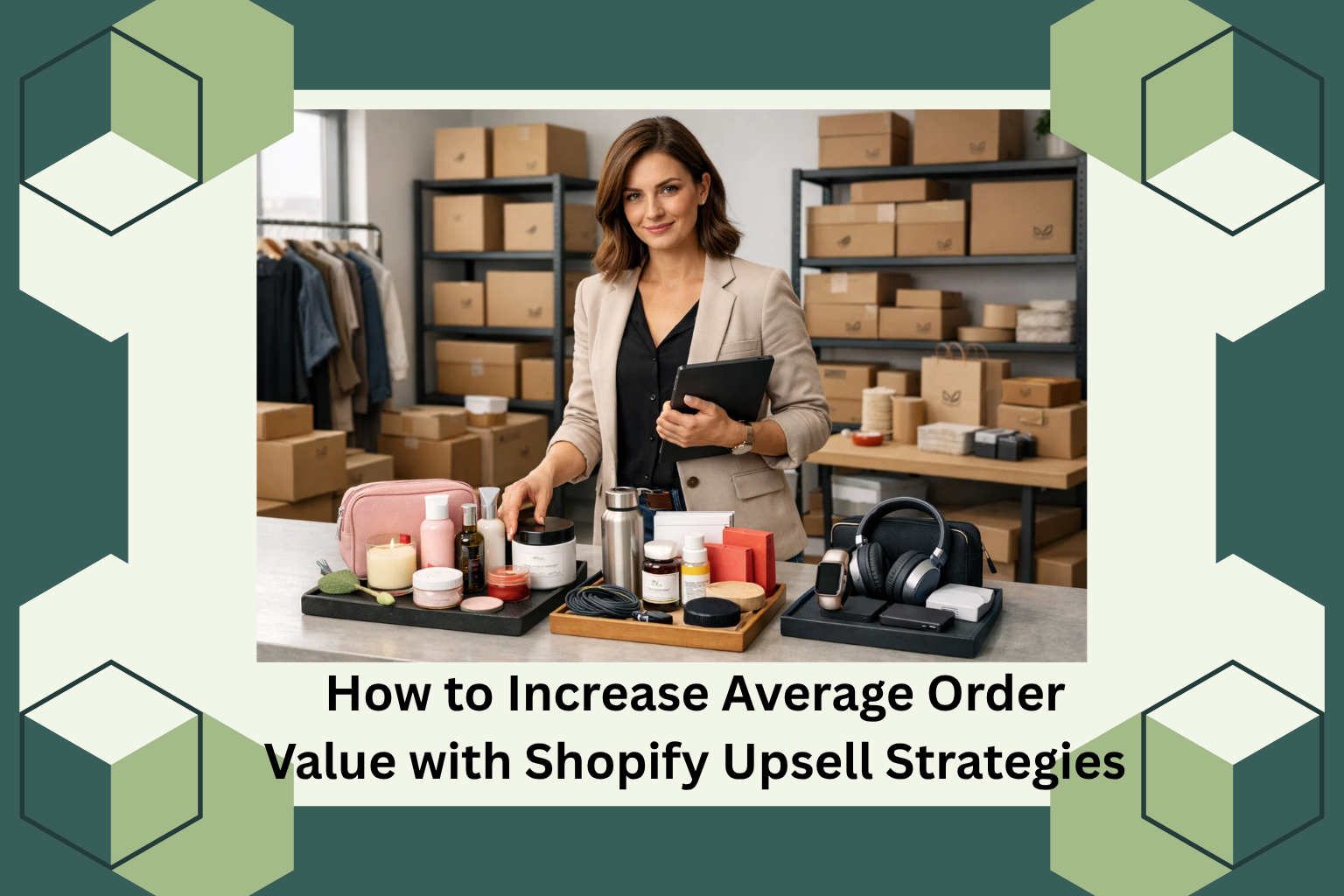
Let me ask you something honest: when did you last look at your store’s average order value and think, “I wish I was getting more from each customer”?
If that thought crosses your mind regularly, you’re not alone and you’re not failing. Most Shopify store owners pour energy into getting traffic, running ads, and perfecting their product photos. But they leave a significant amount of money on the table simply because they never ask the customer to buy a little more.
That’s what this guide is about. Not tricks. Not manipulation. Just smart, respectful Shopify upsell strategies that make the shopping experience better for your customer and more profitable for your store at the same time.
Whether you’re running a general dropshipping store sourcing from AliExpress, a niche print-on-demand brand, or a growing Shopify business with your own inventory, these strategies apply directly to what you’re building.
How to Increase Average Order Value with Shopify Upsell Strategies
What Is Average Order Value and Why Should You Care
Average order value, or AOV, is simply your total revenue divided by the number of orders in a given period. If you made $10,000 from 200 orders last month, your AOV is $50.
Here’s why this number matters more than most store owners realize: increasing your AOV costs you almost nothing compared to acquiring a new customer. According to research published by Invesp, acquiring a new customer costs five times more than retaining an existing one. And the moment a customer is already on your product page or in your cart, you have their attention and their trust. That’s the most valuable window in e-commerce.
A modest AOV increase of even 15–20% across your store can have a compounding effect on profitability, especially when your ad costs and shipping costs stay fixed.
So the question isn’t whether you should focus on AOV. It’s how.
The Three Upsell Moments That Actually Work
Before we get into tactics, let me be clear about one thing: upselling works when it’s relevant. A customer buying a yoga mat doesn’t want to be shown a laptop stand. But show them a yoga block or a mat cleaning spray, and suddenly you’ve added value to their purchase, not friction.
There are three natural moments in every Shopify purchase journey where upselling fits without feeling forced.
1. On the Product Page (Before Add to Cart)
This is the most underused moment. The customer is already interested they’re reading your product description, looking at your images, and thinking about buying. This is the perfect time to show them complementary products or upgraded versions.
“Frequently Bought Together” widgets work extremely well here. You’ve seen them on Amazon your whole life, and there’s a reason they’re still there they work. According to McKinsey, product recommendations account for up to 35% of Amazon’s revenue. That’s not a coincidence. It’s smart, relevant suggestion done at scale.
On Shopify, you can replicate this with the right app. The key is to keep it simple: one or two complementary items, clearly priced, easy to add without leaving the page.
2. In the Cart (Right Before Checkout)
Once someone has committed to buying they’ve added to cart they’re psychologically in “purchase mode.” This is a high-intent moment, and it’s a great time to surface a relevant add-on or upgrade.
Cart-based upsells work differently from product page upsells. Here, you can trigger offers based on what’s already in the cart. If someone has $45 worth of items and your free shipping threshold is $60, a smart cart message saying “Add $15 more for free shipping” is genuinely helpful. You’re not manipulating them you’re doing them a favor.
Similarly, if someone has a specific product in their cart, you can show them a matching accessory or a bundle deal with a small discount. Done right, this feels like good service, not a sales pitch.
3. Post-Purchase (After the Order Is Placed)
Post-purchase upsells are criminally underused by most small and mid-sized Shopify stores. The moment after someone completes their order, they feel good relieved, excited, validated in their decision. That emotional state makes them more open to an additional offer than at almost any other point.
A one-click post-purchase offer “Add this to your order before it ships” doesn’t require them to re-enter payment details. That low friction, combined with the high-trust moment, makes conversion rates on post-purchase offers surprisingly strong.
Bundling: The Quieter Version of Upselling
Upselling is asking someone to buy more or better. Bundling is showing them that buying together just makes sense.
Think about it from the customer’s perspective. If you’re selling a camera, and you show a bundle: camera + carrying case + memory card at a combined price that saves them $12, you haven’t pressured them. You’ve solved a problem they were going to have anyway (they were going to need those accessories), and you’ve saved them money in the process.
For AliExpress dropshippers especially, bundling is a powerful differentiator. Many dropshippers sell the same products from the same suppliers. A store that presents products as curated bundles even at a small discount looks more professional and earns more per transaction than a store showing identical single-item listings.
How to Build Effective Bundles
Start with what customers actually buy together. Look at your order history. If you consistently see two products appearing in the same order, that’s your bundle. You don’t have to guess your data tells you.
Then price the bundle attractively. A 10–15% discount on the combined price is usually enough to tip the decision. You’re not giving away margin you’re accelerating a purchase decision that might have taken two separate visits.
Volume Discounts: Turning Single Buyers Into Bulk Buyers
Volume discounts are different from bundles. Instead of packaging different products together, you’re encouraging buyers to purchase more of the same product at a better per-unit price.
“Buy 2, get 10% off. Buy 3, get 20% off.” Simple. Clear. Effective.
This strategy works particularly well for consumable products (supplements, skincare, cleaning products), products that naturally get used in multiples (socks, candles, notebooks), and products commonly bought as gifts (where buying three means one for each family member).
The key to making volume discounts work is visibility. If the discount is buried in your product description, it won’t move the needle. It needs to be shown prominently, ideally with a visual tier display right on the product page.
BOGO and Gift-With-Purchase
Buy One Get One (BOGO) is one of the most psychologically compelling promotions in retail. Customers feel like they’re winning something, even when the margin math works perfectly in your favor at scale.
Gift-with-purchase campaigns work similarly. “Spend $75, get a free tote bag” creates a target for the customer to aim at, increasing average cart value to hit that threshold. A study by the Journal of Marketing Research found that consumers value free gifts attached to a purchase more highly than equivalent cash discounts even when the dollar value is the same. That’s a real behavioral insight worth using.
Common Mistakes That Kill Upsell Conversions
Let me be direct about what doesn’t work, because I’ve seen store owners invest in all the right tools and still get poor results.
Showing too many options at once. If you surface five upsell offers on a single product page, you create decision fatigue. The customer ignores all of them. Pick one, maybe two. Relevance beats volume every time.
Discounting too aggressively. If every upsell comes with a 40% discount, customers start to wonder why your regular prices are so high. Use discounts strategically enough to tip the decision, not so much that it undermines your pricing integrity.
Ignoring mobile. More than half of Shopify traffic comes from mobile devices. If your upsell widget looks great on desktop but awkward on a phone screen, you’re losing conversions at the exact moment that matters most. Always preview your offers on mobile before publishing.
No analytics. If you’re not tracking which offers convert and which don’t, you’re flying blind. Every upsell campaign should have a measurable output: impressions, clicks, conversion rate, revenue attributed.
How AeroApps Helps You Execute All of This Without a Developer
Here’s where it comes together practically.
Everything we’ve talked about product page bundles, cart-based offers, volume discounts, BOGO campaigns, gift-with-purchase rules requires tools to implement. You could hire a developer. You could stitch together four or five different apps from different companies. Or you could use a suite that was built specifically for this purpose.
AeroApps, trusted by over 1 million Shopify users worldwide, offers two tools that directly execute the strategies in this guide. These Shopify upsell strategies are designed to be practical and immediately actionable.
Aero Upsell & Bundle handles your product page and cart-based upsell strategy. You can create Frequently Bought Together displays, product add-ons shown directly on the product page, and in-cart offers triggered by what a customer has already selected. Each offer is fully customizable title, description, placement, discount type (percentage off, fixed amount, or free shipping). There’s a live mobile and desktop preview so you see exactly what your customers see before anything goes live. No code. No developer. No guesswork.
Aero Volume Booster handles your promotional campaign strategy. BOGO deals, volume-based pricing tiers, gift-with-cart-value rules, gift-with-quantity-purchase rules, and time-limited countdown offers are all managed from a single dashboard. You can set start and end dates, customize your messaging to match your brand voice, and manage multiple active campaigns simultaneously. When a promotion ends, it ends no manual cleanup required.
Both tools are designed to work together within the AeroApps ecosystem, which means no theme conflicts, no competing scripts, and no finger-pointing between support teams when something doesn’t look right.
The Bottom Line
Increasing your average order value doesn’t require more ad spend, a bigger product catalog, or a development team. It requires showing the right offer to the right customer at the right moment and making it easy for them to say yes.
Start with one strategy. Look at your top-selling products and ask: what do people naturally buy alongside this? Build one Frequently Bought Together offer. Measure it for two weeks. Then layer in a volume discount on your best-selling consumable. Then run a BOGO campaign around your next seasonal moment.
Compounding small wins in AOV is one of the most sustainable ways to grow a Shopify business. And with tools like Aero Upsell & Bundle and Aero Volume Booster, the execution is genuinely within reach no matter where you are in your store’s growth journey. For more insights, check out our guide on Shopify conversion rate optimization.
Ready to explore what AeroApps can do for your store? Visit the Shopify App Store or reach out directly at contact@aeroapps.io.