
Upsell vs Cross-Sell: What’s the Difference
Upsell vs Cross-Sell: What’s the Difference
As e-commerce sales continue to climb, projected to reach an astounding $6 trillion globally by 2024, understanding effective sales techniques becomes more pivotal for businesses looking to enhance their customer experience and increase revenue. Among these techniques, upselling and cross-selling stand out as common strategies, but many business owners are still unsure about their differences and applications. This guide will help you grasp the upsell vs cross-sell distinction.
In this blog post, we will clarify the distinction between upselling and cross-selling, explore the benefits of each, and help you determine which approach might be best suited for your business model. By the end of this article, you’ll gain a clearer understanding of how to leverage these strategies to improve sales performance.
What Is Upselling and Cross-Selling?
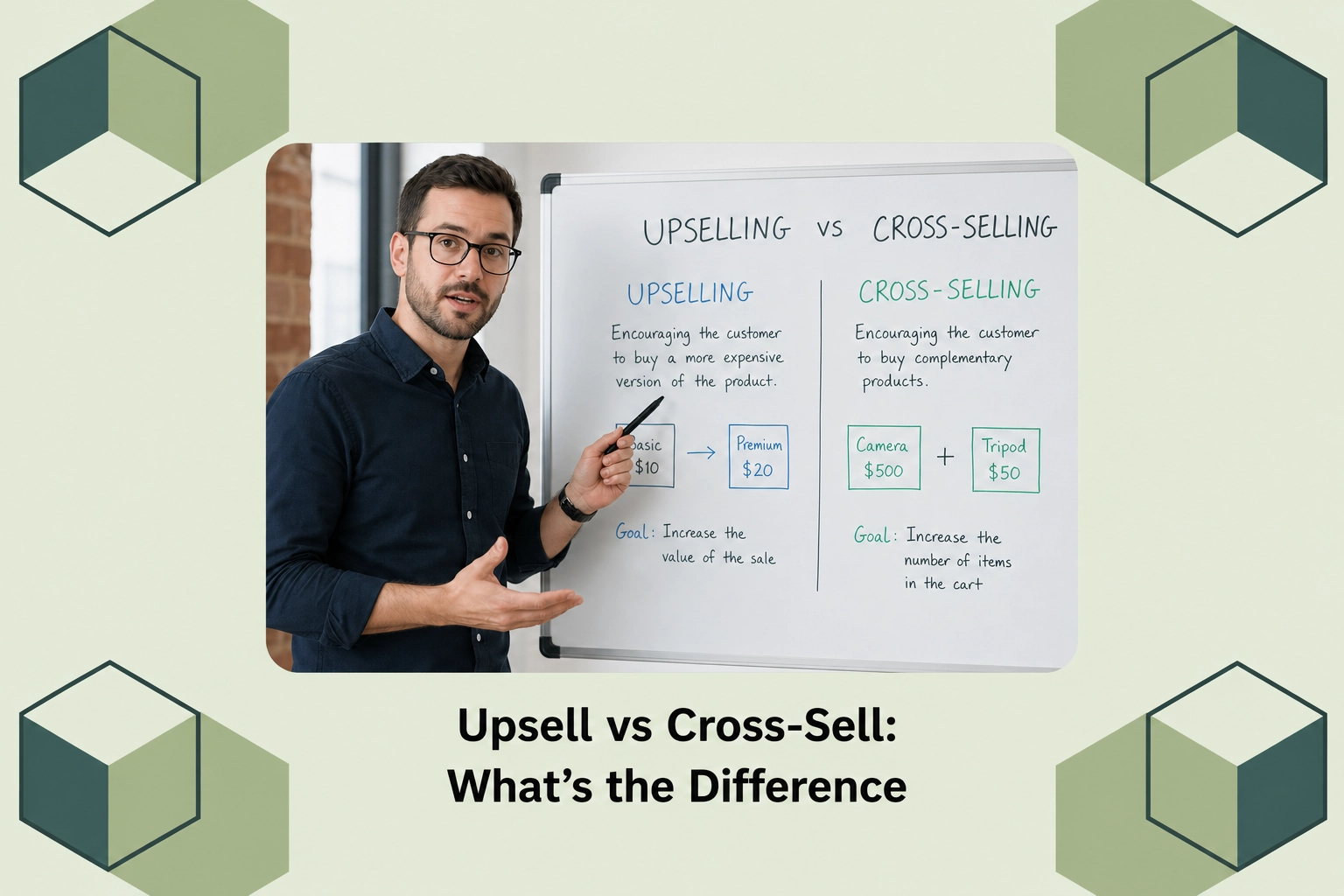
Upselling involves persuading a customer to purchase a more expensive item or an upgrade. The objective is to boost the total revenue by enhancing the customer’s existing choice. For example, when a customer is considering a standard software package, suggesting a premium version with additional features constitutes upselling.
Cross-selling, on the other hand, happens when a sales representative encourages the purchase of complementary products. This strategy is commonly seen in the tech industry where gadgets like smartphones are paired with accessories like headphones or cases. Both strategies are designed to maximize the sales value per customer but apply different methodologies to do so.
Upsell vs Cross-Sell: Core Similarities and Differences
While both upselling and cross-selling aim to increase sales, they differ significantly in approach and application. Upselling focuses on encouraging the customer to spend more on an upgraded version of a product they’re already considering. For instance, upselling in SaaS might involve offering additional premium features for an additional cost, enhancing the customer’s product experience.
Cross-selling is about introducing related products that complement the customer’s purchase. It is more situational and requires understanding customer needs beyond the initial purchase intent. For example, when a customer buys a digital camera, suggesting a suitable lens or memory card is a cross-sell strategy. Learn more about effective app integrations that utilize these strategies at AeroApps.
Types of Widgets
In the realm of product customization and e-commerce, widgets play a crucial role. AeroApps offers a variety of widgets designed to support both upselling and cross-selling efforts effectively. Product recommendation widgets, for instance, can display premium product lines when users view a certain item, aiding in upselling. Cross-selling widgets, on the other hand, might showcase accessories or supplemental products closely related to the item being viewed.
By utilizing these widgets, businesses can seamlessly integrate suggestive selling techniques right into their commerce platforms. This approach not only helps to increase average order values but also enriches the customer shopping experience by providing them with value-adding options they might not have considered initially.
Pricing
The pricing strategy for upselling and cross-selling varies significantly. Upselling typically means offering customers a higher-priced product, often associated with additional functionalities or exclusive perks. For example, in a SaaS environment, a software package could be upgraded with premium support or enhanced analytical tools for a higher fee.
Cross-selling, however, may not necessarily alter the unit price of the main product. Instead, it focuses on bundling complementary products, sometimes at a discounted rate. AeroApps provides flexible service packages that cater to both strategies, ensuring compatibility with varying business models and consumer preferences.
Why It Matters
Understanding and effectively utilizing upselling and cross-selling strategies is more crucial now than ever with market competition intensifying and consumer expectations growing. Retailers that successfully implement these techniques can expect a 10-30% increase in revenue. With AeroApps, Shopify merchants have access to a comprehensive toolkit tailored to optimize these sales strategies.
In today’s market context, where personalization and customer satisfaction are key drivers of purchase decisions, AeroApps offers Shopify merchants unique customization capabilities that make upselling and cross-selling efforts feel personalized and natural. This personalization is crucial in aiding customers to see real value in their purchase decisions, leading to higher customer satisfaction and retention rates.
Compared to traditional sales approaches, integrating upsell and cross-sell tactics with AeroApps can provide Shopify stores the much-needed edge by differentiating their product offerings and fostering stronger customer relationships.
How It Works
Starting with AeroApps is straightforward. The platform offers a range of apps that seamlessly integrate with Shopify, providing merchants with intuitive tools for product customization and store enhancements. To launch upselling, retailers can utilize widgets to promote upgraded versions of their products directly on their product pages.
Meanwhile, cross-selling is implemented via smart recommendations. AeroApps’ app suite can analyze purchasing trends and consumer behavior, suggesting complementary products at the point of sale. This ensures that every customer interaction is optimized for potential increases in sales volume without overwhelming the buyer.
With over 5 million users leveraging AeroApps every month, it is a reliable toolkit for merchants looking to not only enhance their store’s sales strategies but also improve the overall shopping experience. Detailed guides and customer support are available to ensure seamless implementation.
Conclusion
Embracing the right sales strategy can significantly impact your business’s bottom line. By understanding the nuances between upselling and cross-selling, you can tailor your approach to meet your customers’ needs more effectively. Visit AeroApps to get started with tools that can support your sales goals in an ever-evolving digital marketplace.
FAQs
How do I know when to upsell versus cross-sell?
The decision between upselling and cross-selling depends on your product offerings and understanding your customer intent. Upselling is ideal when a more advanced version or premium feature of a product enhances the customer’s purchase. In contrast, cross-selling fits when suggested items complement the original purchase, enriching the product use rather than replacing it.
Are there specific industries where upselling works better?
Upselling tends to thrive in industries where product versions or subscription tiers exist, such as SaaS, tech gadgets, and travel. These sectors often have clear value additions between tiers or versions, making it easier to demonstrate the benefits of choosing a more premium option.
Does implementing these strategies increase customer satisfaction?
When executed correctly, both upselling and cross-selling can enhance customer satisfaction by providing valuable suggestions that improve their purchase decision. For instance, offering a premium service level during an upsell can reassure customers that they are getting the most out of their investment.
What are the challenges of using these techniques?
The primary challenge in using upselling and cross-selling is ensuring that the offered recommendations remain relevant and valuable to customers. Overly aggressive selling can deter customers and lead to negative experiences. Therefore, it’s about striking a balance that aligns with the customer’s buying journey.