
How to Increase Sales with Tiered Pricing
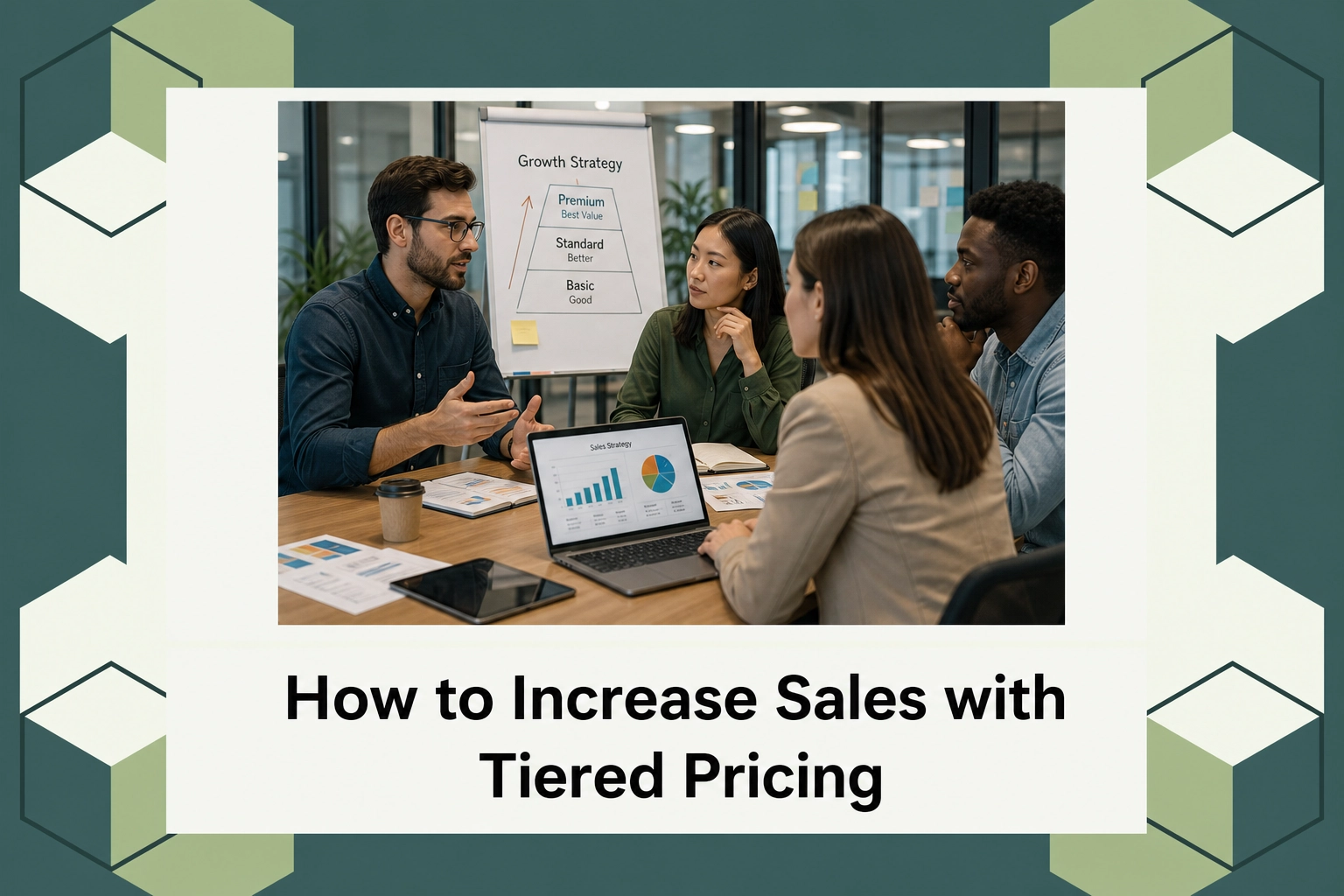
Boost Your Sales: The Power of Tiered Pricing Strategies
Introduction
The pricing model you choose for your products can significantly impact your sales and profit. According to recent market research, businesses using tiered pricing strategies have seen sales increases by up to 30%. Such results showcase the potential of tiered pricing in capturing diverse customer segments and maximizing revenue.
Tiered pricing is more than just offering different price points; it’s a strategic approach to meet various consumer needs and preferences effectively. In this post, we’ll dive deep into understanding tiered pricing, explore why it’s a powerful tool for increasing sales, and detail actionable strategies to implement it successfully.
What Is Tiered Pricing?
Tiered pricing is a flexible pricing strategy where products or services are offered at multiple price levels. Each tier corresponds to different feature sets, service levels, or quantities, allowing customers to choose a package that best suits their needs and budget.
This approach caters to various consumer segments by accommodating different willingness to pay, ensuring that no customer base is left untapped. Businesses ranging from SaaS providers to e-commerce platforms like Shopify can benefit by offering products that align closely with customer expectations.
Budding entrepreneurs, growing businesses, and established brands need tiered pricing to broaden market reach, encourage higher spending through upgrades, and maintain competitive advantage. Essentially, it allows businesses to provide value at every customer level without leaving money on the table.
How to Increase Sales with Tiered Pricing
1. Customer Tier Segmentation
Understanding your customer base is the first step. From small business owners requiring budget solutions to enterprise clients needing comprehensive packages, segmenting based on needs and capabilities is crucial. This strategy ensures targeted offerings that lead to higher conversions. Focus on building a structured pricing model that provides clear value at each level.
2. Value-Based Feature Allocation
Businesses must align features with pricing tiers to match customer needs effectively. For example, Shopify merchants using AeroApps can set core features in the base tier and premium add-ons in higher tiers. This allocation entices consumers to purchase beyond the basic package, maximizing their store’s capabilities.
3. Price Psychology and Anchoring
Utilizing psychological pricing strategies can significantly influence buyer behavior. By setting an attractive middle-tier price, businesses can create a perception of value. This technique appeals to cost-conscious consumers who seek balanced benefits and pricing, resulting in increased uptake of middle-tier products.
4. Offering Exclusive Tier Benefits
Incorporate unique benefits in higher tiers to lure customers into spending more. For instance, AeroApps users might offer exclusive design tools or advanced analytics for premium tiers. Targeting users interested in ecommerce growth can result in increased willingness to upgrade.
5. Trial and Upgrade Paths
Providing customers a trial of higher-tier features encourages experimentation. Once users experience the benefits, the natural transition to a paid version becomes smoother. Shopify retailers can use AeroApps to offer time-limited trials, analyzing which features drive upgrades successfully.
Ensure your tier setup is clear and concise. Overstocking choices can lead to decision paralysis. Focused options allow consumers to easily assess and choose the best-fit package, improving customer satisfaction and conversion rates. Regularly reviewing your pricing performance ensures it adapts to market conditions and customer feedback. For Shopify merchants, apps like AeroApps provide valuable sales insights, guiding adjustments that refine pricing strategies for optimal performance. AeroApps offers an array of features tailored for Shopify merchants, such as storefront customization and automatic integrations with third-party apps. By utilizing design widgets, businesses can creatively modify their store appearance and deliver engaging customer experiences. Additionally, AeroApps provides dynamic pricing tools that directly support tiered pricing strategies. These features enable merchants to efficiently manage different product offerings and ensure consistent profit margins. Tiered pricing in AeroApps is structured around delivering value for various business sizes. With multiple subscription levels, merchants from startups to well-established brands can find packages that suit their specific operational needs. AeroApps pricing models are designed to align with the range of features provided, from basic customization tools to advanced analytic capabilities. This flexibility ensures merchants only pay for functionalities that directly contribute to their growth objectives. In an increasingly competitive market, the ability to reach diversified customer segments is essential. Tiered pricing not only provides elasticity in negotiations but builds relationships with different clientele. As market demands shift, businesses equipped with varied pricing strategies stand to reap substantial benefits. AeroApps stands out as a preferred solution due to its comprehensive suite tailored specifically for Shopify merchants. It surpasses alternatives by providing seamless integration, intuitive design tools, and an adaptable pricing framework that accommodates evolving e-commerce trends. Setting up tiered pricing with AeroApps begins by analyzing your existing customer data and identifying key buyer segments. Understanding their needs allows for crafting precise tiered offerings. The AeroApps platform simplifies this process, offering integration and management tools for Shopify merchants. Merchants can implement tiered pricing by configuring product variations and setting up different pricing models directly within Shopify through AeroApps. This seamless operation is enhanced by automation tools that ensure smooth transitions and accurate pricing adjustments. Continuous monitoring of sales patterns and customer feedback enables ongoing optimization. AeroApps further supports this by offering analytic insights that guide future iterations and maintain competitiveness in pricing strategy. Tiered pricing offers a strategic edge in driving sales and capturing diverse customer segments. For Shopify merchants seeking to implement this approach, AeroApps provides the tools necessary to execute effectively and efficiently. By aligning your pricing with customer needs and market trends, AeroApps helps businesses not just meet sales targets but exceed them. Dive into the world of tiered pricing with AeroApps and watch your sales soar. Tiered pricing allows businesses to cater to different customer segments with varied purchasing powers and preferences. It promotes upselling and increases overall revenue by offering tailored solutions that match customer value perceptions, thus enhancing satisfaction and loyalty. Yes, small businesses can greatly benefit from tiered pricing. By understanding customer needs and varying levels of willingness to pay, even startups can attract a wider audience and encourage spending by offering perceived value at multiple price points. AeroApps provides a suite of tools designed to facilitate seamless implementation of tiered pricing strategies for Shopify merchants. Its capabilities include product customization, detailed analytics, and operational insights, which make setting up and managing tiered pricing straightforward. Analytics are crucial as they offer insights into customer behavior, pricing effectiveness, and tier performance. By leveraging data, businesses can make informed decisions on pricing adjustments, marketing strategies, and tier improvements to remain competitive and maximize revenue potential.7. Ongoing Analysis and Adjustment
Types of Widgets or Features
Pricing
Why It Matters
How It Works
Conclusion
FAQs
What is the main advantage of tiered pricing?
Can small businesses effectively use tiered pricing?
How does AeroApps facilitate a tiered pricing strategy?
What role do analytics play in tiered pricing?