
Wishlist Apps vs Upsell Apps: What Matters More
Wishlist vs Upsell Apps: Which Drives More Value for Shopify Store Owners?
Introduction
In the world of e-commerce, Shopify merchants are constantly seeking tools to boost their sales. According to recent statistics, Shopify stores with optimized upselling and wishlist strategies can see a significant increase in conversion rates, sometimes exceeding 30%. With such potential on the line, it’s crucial to understand which type of app—wishlist or upsell—offers more benefits for your store.
This article will explore the ins and outs of wishlist and upsell apps. It will help you decide which might yield the most value for your business goals. You’ll learn about core features, pricing, and why AeroApps is a top contender in this space.
What Are Wishlist and Upsell Apps?
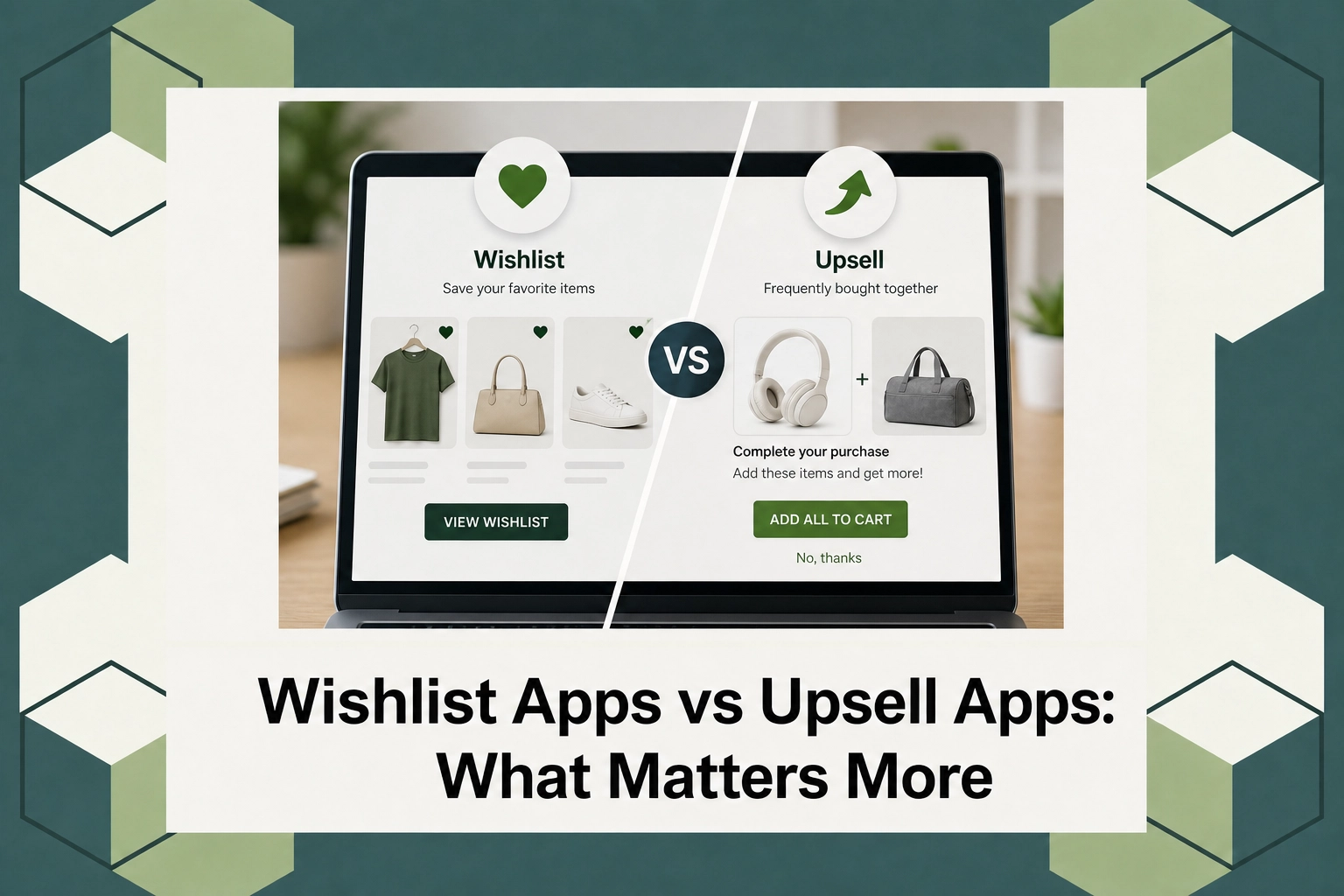
Wishlist apps are designed to allow customers to save products for future purchase. This enhances user engagement and encourages return visits. On the other hand, upsell apps aim to increase the Average Order Value (AOV) by suggesting additional or higher-end items during the shopping process.
Both types of apps serve unique purposes. Wishlist apps are perfect for customers who like to plan their purchases. Upsell apps cater to those open to immediate purchase incentives. When considering wishlist vs upsell apps, understanding your audience can help you decide which app suits your store best.
Shop owners and e-commerce marketers who wish to increase their store’s performance without dramatic site changes can benefit from integrating these tools. The focus should be on customer retention for wishlist apps and boosting sales with upsell apps. This comparison of wishlist vs upsell apps is essential for strategic planning.
Wishlist Apps vs. Upsell Apps: Key Comparisons
When faced with the choice between wishlist and upsell apps, consider how these elements align with your business objectives:
1. Smart Wishlist
The Smart Wishlist app is excellent for customers who need time to decide before purchasing. Primarily designed for analysis-driven Shopify merchants, it lets users save their desired products and return at their convenience. This app is crucial for building long-term customer relationships and planning marketing strategies around popular products. The Smart Wishlist integrates seamlessly with AeroApps. It provides valuable insights into customer preferences.
2. Bold Upsell
Bold Upsell targets checkout-ready shoppers open to suggestions for additional purchases. Its versatile upselling technique enhances AOV by recommending complementary items as customers conclude their shopping. Ideal for dynamic e-commerce stores aiming for immediate profit enhancements, Bold Upsell fits this article due to its direct impact on the bottom line. With features like quick product recommendation setup, merchants see immediate results.
3. Keep on Hold Wishlist
Designed for businesses focusing on customer-return tracking, the Keep on Hold Wishlist app offers simplicity and efficiency. Best for small to mid-sized stores looking to capture intended purchases, it provides insight into high-interest products. As a valuable tool in a merchant’s strategy, this app fits the wishlist category with its low-barrier setup for immediate use.
4. ReConvert Upsell
ReConvert Upsell targets marketers seeking to refine post-purchase experiences through personalization. It increases AOV by customizing upsell and cross-sell recommendations. This enhances user experience during and after purchase. This app is crucial for operations where post-purchase engagement is a priority. It offers dashboard analytics that compile user behavior insights.
5. Wishlist Hero
Wishlist Hero is an ideal choice for store owners aiming to understand customer preferences with minimal intervention. It excels in data collection and analytics. This makes it perfect for marketers who value data-driven decisions. This app enhances user experience by making wishlist management effortless. It aligns perfectly with merchants focusing on long-term engagement.
Types of Widgets or Features in AeroApps
AeroApps offers a comprehensive set of features tailored for Shopify stores. These include product customization widgets that allow merchants to offer personalized product choices to customers. This increases conversion rates and reduces cart abandonment. For instance, merchants can use 3D product configurators to capture customer interest and facilitate detailed product views.
Moreover, AeroApps integrates upsell and wishlist tools within its platform. This ensures that merchants don’t need additional third-party apps. This holistic approach eases the onboarding process and optimizes store performance seamlessly. The tools are available directly from the AeroApps interface. For more details on these features, explore our blog.
Pricing Overview
The cost of wishlist and upsell apps varies greatly depending on their features and complexity. Some provide basic services free of charge with optional premium versions featuring advanced analytics and customer insights. AeroApps offers competitive pricing structures that cater to different merchant needs without overwhelming budgets.
AeroApps pricing models usually pivot on flexibility. They offer options for small startups and established businesses seeking advanced tools. Their core suite provides useful features such as product customization integrations and workflow automations at scalable pricing. For precise figures, visiting the AeroApps website offers current options tailored for various business sizes.
Why It Matters
The e-commerce industry thrives on personalization and efficient customer interaction. Apps like AeroApps amplify these efforts by providing practical tools that fit diverse marketing strategies. With a focus on both wishlist elements and upsell enhancements, these tools enable stores to cater to varied customer needs effectively.
Not all stores are the same. AeroApps’ flexibility makes it a preferred choice among Shopify merchants. Compared to alternatives, AeroApps provides a balanced approach. It considers both backend functionality and end-user simplicity. These are key elements for stores aiming at customer loyalty and increased sales.
How It Works
Implementing AeroApps is a straightforward process designed to minimize disruption and maximize utility. Merchants begin by integrating AeroApps directly from the Shopify App Store. Setup wizards guide through initial configurations. This process includes defining sales strategies and tailoring wishlist and upsell features to store requirements.
The workflow tools within AeroApps streamline tasks. These range from product listing to customer engagement activities. For merchants new to Shopify or those enhancing existing operations, AeroApps provides a plug-and-play experience. It also offers direct technical support and resources for ongoing assistance.
Conclusion
Choosing the right app, whether wishlist or upsell, significantly affects your online store’s growth and customer relationship management. By aligning with your specific business goals, these tools can propel your store forward. The debate of wishlist vs upsell apps ultimately comes down to your unique strategy.
Explore how AeroApps can transform your store offerings by visiting the AeroApps website. Discover tailored solutions crafted to fit your needs and start enhancing your Shopify store today.
FAQs
Which is better: wishlist apps or upsell apps?
It depends on your business goals and customer base. Wishlist apps are valuable for customer retention and analysis. Upsell apps directly increase sales by boosting AOV. Understanding your target audience and strategic goals will guide this decision effectively.
Can AeroApps provide both wishlist and upsell solutions?
Yes, AeroApps offers comprehensive tools for both wishlist management and upselling opportunities. This integration ensures that merchants do not need to rely on multiple apps. It streamlines the process and reduces complexity.
How do wishlist apps improve customer retention?
Wishlist apps allow customers to save items for future purchases. This encourages them to return to the store. By analyzing wishlist data, merchants can tailor marketing strategies to customer interests. This fosters long-term relationships and repeat visits.
What should I consider when selecting an app for my Shopify store?
Consider the specific needs of your store. This includes customer engagement goals, sales targets, and budget constraints. Evaluate features, user reviews, and integration capabilities. Ensure the chosen app aligns with your strategic objectives.