Best Push Notification Plugins for Shopify Boutiques
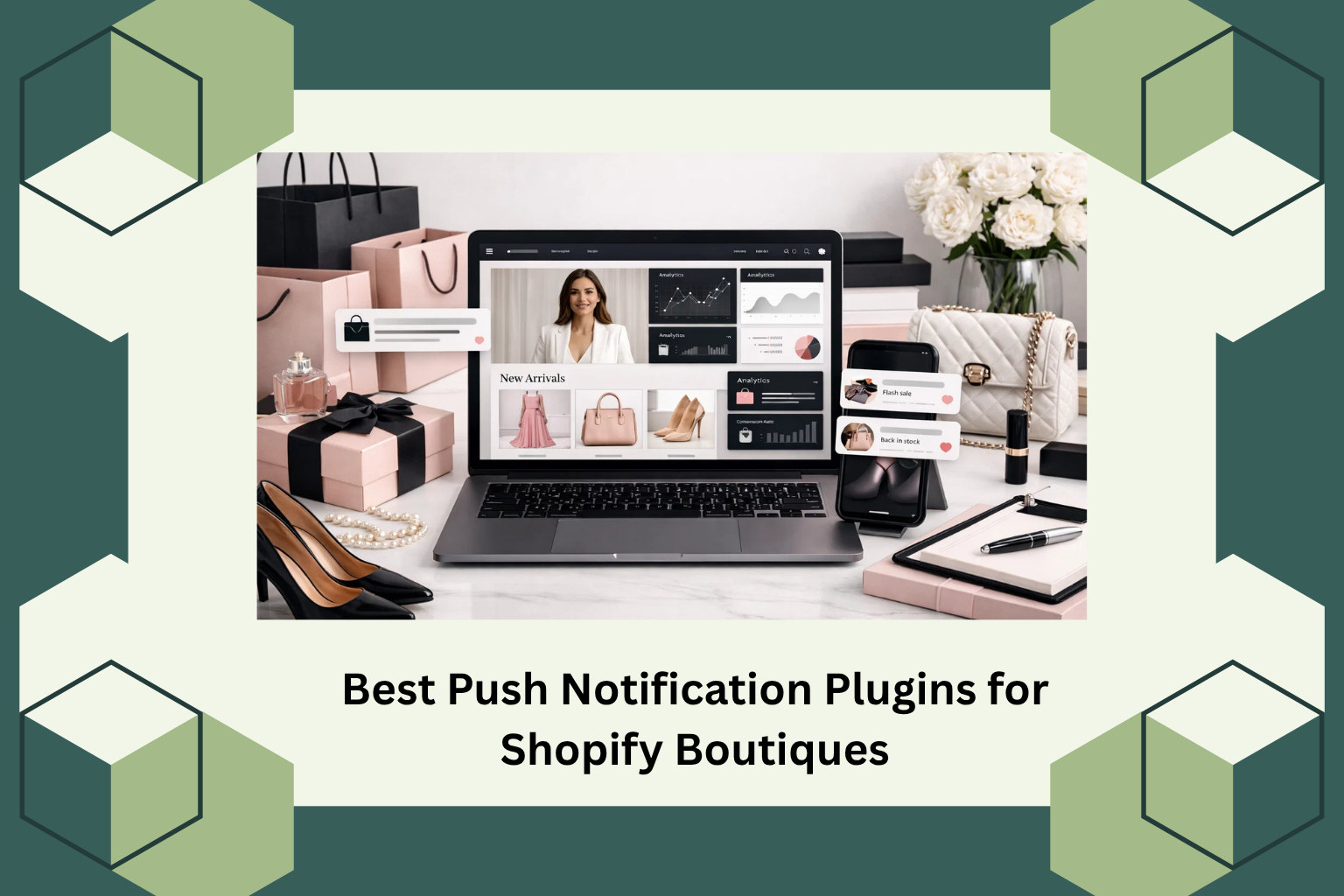
Why Push Notifications Are a Game-Changer for Shopify Boutiques
Running a boutique on Shopify means competing for attention in one of the most visually saturated retail environments imaginable. Email inboxes are cluttered. Social feeds are algorithmically fickle. Push notifications cut through both. They land directly on a subscriber’s screen, bypassing every intermediary, at the precise moment you choose to send them. For boutique owners selling trend-sensitive, emotionally driven products, that kind of immediacy is not just useful. It’s a competitive differentiator.
What Makes Push Notifications Different From Email and SMS Marketing
The defining characteristic of push notifications is velocity. An email might sit unread for hours or days. A push notification surfaces on a locked screen within seconds of being sent. That temporal proximity to the send moment dramatically increases the likelihood of action, particularly for time-sensitive offers.
Opt-in friction is also meaningfully lower. A browser opt-in prompt requires a single click, no email address, no form completion, no personal data exchange. That simplicity drives faster list growth. And rather than replacing email or SMS, push notifications function as a complementary layer in a multi-channel retention architecture, reaching subscribers at touchpoints the other channels cannot access.
What to Look for in a Push Notification Plugin for Your Boutique
Setup should be frictionless. A plugin that requires developer intervention or complex configuration is an immediate liability for boutique owners managing operations independently. Native Shopify integration, ideally installable within minutes, is the baseline expectation.
Segmentation capability separates performative tools from genuinely profitable ones. The ability to target subscribers by purchase history, browsing behaviour, location, or device type ensures your messaging reaches the right person at the right moment. Automation is equally critical. Welcome sequences, abandoned cart reminders, and back-in-stock alerts should run without manual intervention. And the analytics dashboard needs to surface actionable data including click-through rates, conversion attribution, and revenue impact, rather than vanity metrics that look impressive but inform nothing.
Pricing matters enormously for boutiques operating on lean margins. Always evaluate total cost of ownership, including subscriber tier limits and feature gating, rather than just the headline plan price.
How Push Notifications Drive Revenue for Fashion and Lifestyle Boutiques
Flash sale alerts are where push notifications truly excel. The combination of brevity, immediacy, and scarcity language creates genuine purchase urgency that email struggles to replicate at the same velocity. Back-in-stock notifications are arguably even more commercially potent; a subscriber who has already expressed interest in a product is extraordinarily close to the point of purchase and requires minimal persuasion.
Abandoned cart recovery through push reminders captures revenue that would otherwise evaporate entirely. A well-timed notification sent one to two hours after cart abandonment, particularly with a visual product reminder, consistently outperforms equivalent email recovery sequences in click-through benchmarks. New arrival announcements sustain habitual engagement, conditioning subscribers to return to your store with genuine anticipatory interest.
The Best Push Notification Plugins for Shopify Boutiques in 2026
- PushOwl remains the most purpose-built option for Shopify stores. Its native integration is seamless, its abandoned cart automation is reliable, and its campaign drip sequencing gives boutique owners sophisticated engagement tooling without requiring marketing expertise. Pricing scales with subscriber volume, making it accessible for early-stage stores while remaining viable at meaningful scale. Boutique owners consistently cite its intuitive interface and measurable revenue attribution as its most valuable attributes.
- Firepush appeals to boutiques running coordinated multi-channel campaigns. By unifying push, SMS, and email within a single platform, it reduces the operational complexity of managing separate tools. Segmentation and personalisation options are robust, and for stores already investing in SMS marketing, the consolidated workflow delivers genuine efficiency gains.
- OneSignal offers a generous free tier that makes it an attractive entry point for boutiques in their earliest growth stage. Beyond push, it supports in-app messaging and email, broadening its utility. The free plan carries limitations around segmentation depth and automation sophistication, but for stores prioritising cost minimisation before scaling, it provides a workable foundation.
- Webpushr is lightweight, affordable, and more capable than its modest profile suggests. Subscriber segmentation is competent, pricing is accessible, and the setup process is genuinely uncomplicated. For budget-conscious boutiques that need reliable basic functionality without a premium price point, Webpushr performs consistently.
- Aimtell serves data-driven boutique owners who want granular behavioural targeting. Custom audience building, page-level triggers, and advanced segmentation make it a strong fit for stores with sufficient traffic volume to make micro-targeting worthwhile. The pricing reflects its advanced positioning, so smaller boutiques should weigh feature utilisation carefully before committing.
- VWO Engage differentiates itself through its conversion optimisation heritage. A/B testing push notification copy, timing, and creative is built into the platform’s DNA, which benefits boutiques willing to invest in iterative campaign improvement. It’s less suitable for stores seeking a simple set-and-forget configuration, but for analytically minded operators, the testing infrastructure is genuinely valuable.
Setting Up Your First Push Notification Campaign
Your opt-in prompt is the first conversion in the push notification funnel. Contextualise it with a value proposition: “Get notified when new arrivals drop” outperforms a generic browser permission request every time. Push copy should be concise, specific, and action-oriented. Under 60 characters for the title, under 120 for the body. Vagueness kills click-through rates.
Timing and frequency require deliberate calibration. Boutique audiences respond well to sends between late morning and early evening on weekdays. Frequency should not exceed three to four notifications per week for general campaigns; over-notification is the primary driver of subscriber list attrition. Rich media including product images and emojis increases engagement meaningfully, particularly in fashion and lifestyle categories where visual context directly influences purchase intent.
Segmentation, Automation, and Measurement
Segment by purchase history to separate first-time buyers from repeat customers, and tailor messaging accordingly. Geographic segmentation enables timezone-appropriate delivery. Device segmentation allows creative optimisation for mobile versus desktop rendering differences.
Every boutique should have at minimum four automations running: a welcome sequence, abandoned cart recovery, back-in-stock alerts, and a winback campaign for lapsed subscribers. These four workflows, properly configured, generate disproportionate revenue relative to their setup investment.
Measure click-through rates against industry benchmarks of two to five percent for ecommerce push. Track revenue attribution per campaign rather than engagement metrics in isolation. Use that data to refine copy, timing, and segmentation on an ongoing cadence.
Common Mistakes, Compliance, and Choosing the Right Plugin
The most prevalent mistake boutique owners make is over-notification. Sending too frequently erodes subscriber trust with measurable speed. Generic, non-personalised messaging is the second most common failure. Both are entirely avoidable with minimal planning.
GDPR and CCPA compliance requires explicit opt-in consent, a transparent privacy policy, and straightforward unsubscribe mechanisms. Most reputable plugins handle the technical compliance infrastructure automatically, but store owners retain responsibility for how subscriber data is collected and used.
When comparing plugins side by side, PushOwl leads for Shopify-native reliability, Firepush for multi-channel integration, OneSignal for cost-conscious beginners, and Aimtell for advanced behavioural targeting. The right choice depends on your store’s current scale, technical appetite, and marketing ambitions.
How AeroApps Helps Your Shopify Boutique Grow Beyond Notifications
Push notifications bring people to your store. AeroApps makes sure your store is ready to convert them.
Trusted by over one million users worldwide, AeroApps is an all-in-one Shopify toolkit built to help boutique owners sell smarter without touching a single line of code. Four tools work together to maximise the revenue your push campaigns generate: Aero Product Variant Options enriches product pages with unlimited customisation fields and swatches; Aero Form Builder captures customer data that sharpens your segmentation; Aero Upsell and Bundle increases average order value with relevant add-ons at the point of purchase; and Aero Volume Booster powers BOGO deals, tiered discounts, and time-limited offers that push notifications are perfectly built to promote.
Explore AeroApps on the Shopify App Store and start building smarter today.