
High-Converting Shopify Product Pages Guide
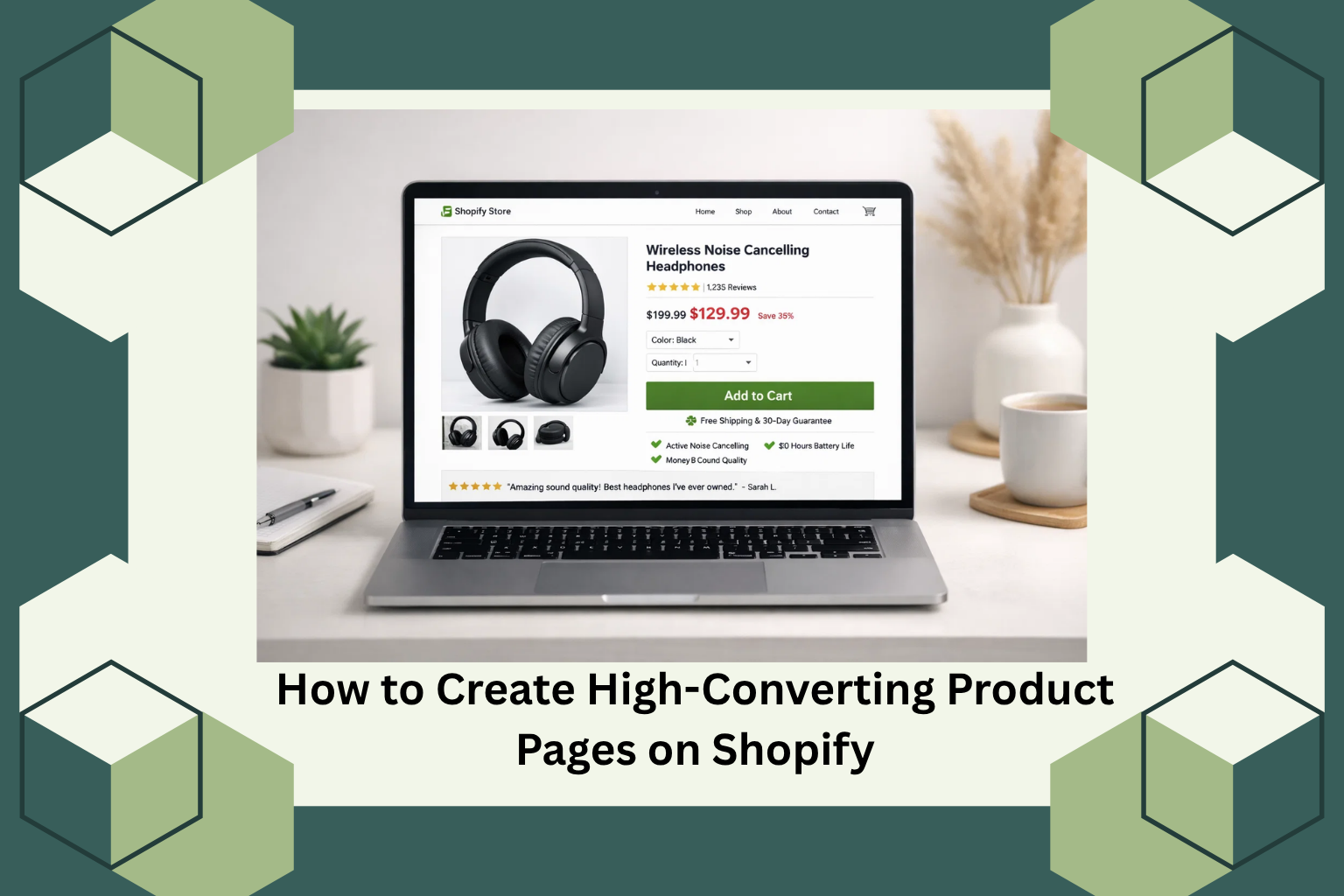
If your Shopify store is getting traffic but not enough sales, the problem is rarely your ads.
It is almost always your product page.
I have worked on stores where traffic looked healthy, but conversions were low. The moment we improved the product page, everything changed. Same traffic, same product, but significantly more revenue.
Your product page is where the decision happens. It is where curiosity turns into trust, and trust turns into a purchase.
So instead of thinking about design or features first, think about this one question.
Does your product page make it easy for someone to say yes?
In this guide, I will walk you through how to build a product page that answers that question properly.
What a High-Converting Product Page Actually Does
A good product page is not just informative. It removes doubt.
When someone lands on your page, they are asking a series of silent questions.
- Is this product right for me?
- Can I trust this store?
- What happens if something goes wrong?
- Is this worth the price?
Your job is to answer all of those without making the customer work for it.
From experience, the best product pages feel less like a sales pitch and more like a guided explanation.
Start With a Clear and Specific Product Offer
The biggest mistake I see is vague positioning.
If your product is not instantly clear, the customer leaves.
Your product title and first section should answer three things immediately:
- What the product is
- Who it is for
- Why it is useful
For example, “Stainless Steel Bracelet” is weak.
But “Personalized Stainless Steel Bracelet with Custom Engraving” is clear and specific.
Clarity reduces hesitation. And hesitation kills conversions.
Use Images That Do the Selling for You
Most people do not read first. They look.
That means your images carry more weight than your text.
From testing across multiple stores, high-converting product pages usually include:
- Clean product-only images
- Lifestyle images showing real use
- Close-ups that highlight details
- Context images that show size or scale
If possible, include short videos. Even simple clips showing the product in use can increase engagement.
The key is realism. Over-edited or misleading visuals reduce trust.
Write Descriptions That Answer Real Questions
A product description is not a place to sound fancy.
It is a place to remove doubt.
Instead of listing features, explain what those features mean for the customer.
For example:
Instead of saying “Made from stainless steel”
Say “Made from stainless steel so it does not rust or fade over time”
This connects the feature to a real benefit.
From experience, the best descriptions follow a simple flow:
- What the product does
- Who it is for
- Why it is better than alternatives
- What the customer should expect
When done right, the customer feels informed, not sold to.
Build Trust Before Asking for the Sale
Trust is the foundation of every conversion.
Without it, nothing else works.
There are a few elements that consistently improve trust on Shopify product pages.
- Customer reviews are one of the strongest signals. Real feedback from other buyers reduces uncertainty.
- Clear return and refund policies also matter. When customers know they are protected, they are more likely to buy.
- Secure payment icons and guarantees help reinforce safety.
From what I have seen, even small trust elements can make a big difference, especially for new stores.
Make the Buying Process Feel Easy
Even if your product is great, a complicated buying process will hurt conversions.
Your add to cart section should be simple and clear.
Avoid unnecessary steps. Keep options organized. Make buttons visible and easy to click.
Mobile experience is critical here.
Most Shopify traffic comes from mobile devices, so your page must feel smooth on smaller screens. If users have to zoom, scroll excessively, or struggle to select options, they will leave.
A good product page feels effortless to navigate.
Use Product Options to Create a Better Experience
This is something many stores underestimate.
When customers can customize a product, they feel more connected to it.
Instead of choosing between limited variants, they are actively shaping what they buy.
This is especially powerful for:
- Personalized products
- Gifts
- Bundled items
From experience, adding customization options often increases both conversion rate and order value.
It turns a passive purchase into an interactive experience.
Handle Objections Before They Stop the Sale
Every customer has doubts.
If you do not address them, they will leave.
Common objections include:
Is this product durable?
Include information about the product’s materials and longevity.
How long does shipping take?
Provide clear shipping timeframes and options.
What if I do not like it?
Explain your return and refund policies clearly.
Your product page should answer these clearly.
You can include a simple FAQ section or integrate answers into your description.
When objections are handled upfront, the customer feels more confident moving forward.
Use Social Proof the Right Way
Social proof is not just about adding reviews.
It is about showing that real people trust your product.
This can include:
- Customer photos
- Testimonials
- Usage examples
The more relatable the proof, the stronger the impact.
From testing, user-generated content often performs better than polished brand content because it feels authentic.
Optimize for Speed and Performance
Even the best product page will fail if it loads slowly.
According to Google’s web performance research, users are more likely to leave if a page takes more than a few seconds to load.
This means:
- Compress images
- Avoid heavy scripts
- Use a fast Shopify theme
Speed directly affects both user experience and conversion rate.
Bring Everything Together Into One Flow
A high-converting product page is not about individual elements.
It is about how everything works together.
The customer should move naturally from:
- Understanding the product
- Trusting the brand
- Feeling confident
- Taking action
When this flow is smooth, conversions increase without aggressive tactics.
Final Thoughts
Creating a high-converting Shopify product page is not about tricks or hacks.
It is about clarity, trust, and experience.
When your page answers questions, removes doubt, and makes the process easy, customers are far more likely to buy.
You do not need to redesign everything overnight.
Start with one product page. Improve it step by step. Test what works.
That is how real growth happens.
Final Step: How AeroApps Helps You Build High-Converting Product Pages
If you want to implement these ideas without technical complexity, AeroApps provides a practical solution built specifically for Shopify stores.
With Aero Product Variant Options, you can add unlimited customization fields to your product pages using a simple drag-and-drop builder. This allows you to create interactive product experiences without coding.
You can use conditional logic to show or hide options, keeping your page clean while still offering flexibility. Features like color swatches, file uploads, and custom inputs help make the buying experience more engaging.
Beyond customization, AeroApps also supports upsells and bundles, allowing you to increase order value directly from the product page.
What this means in practice is simple.
You are not just building a product page. You are building a system that guides customers, improves experience, and increases conversions.
If your goal is to turn more visitors into buyers, this kind of setup gives you a strong advantage.

Leave a Reply