
Increase Shopify AOV with Bundles and Upsells
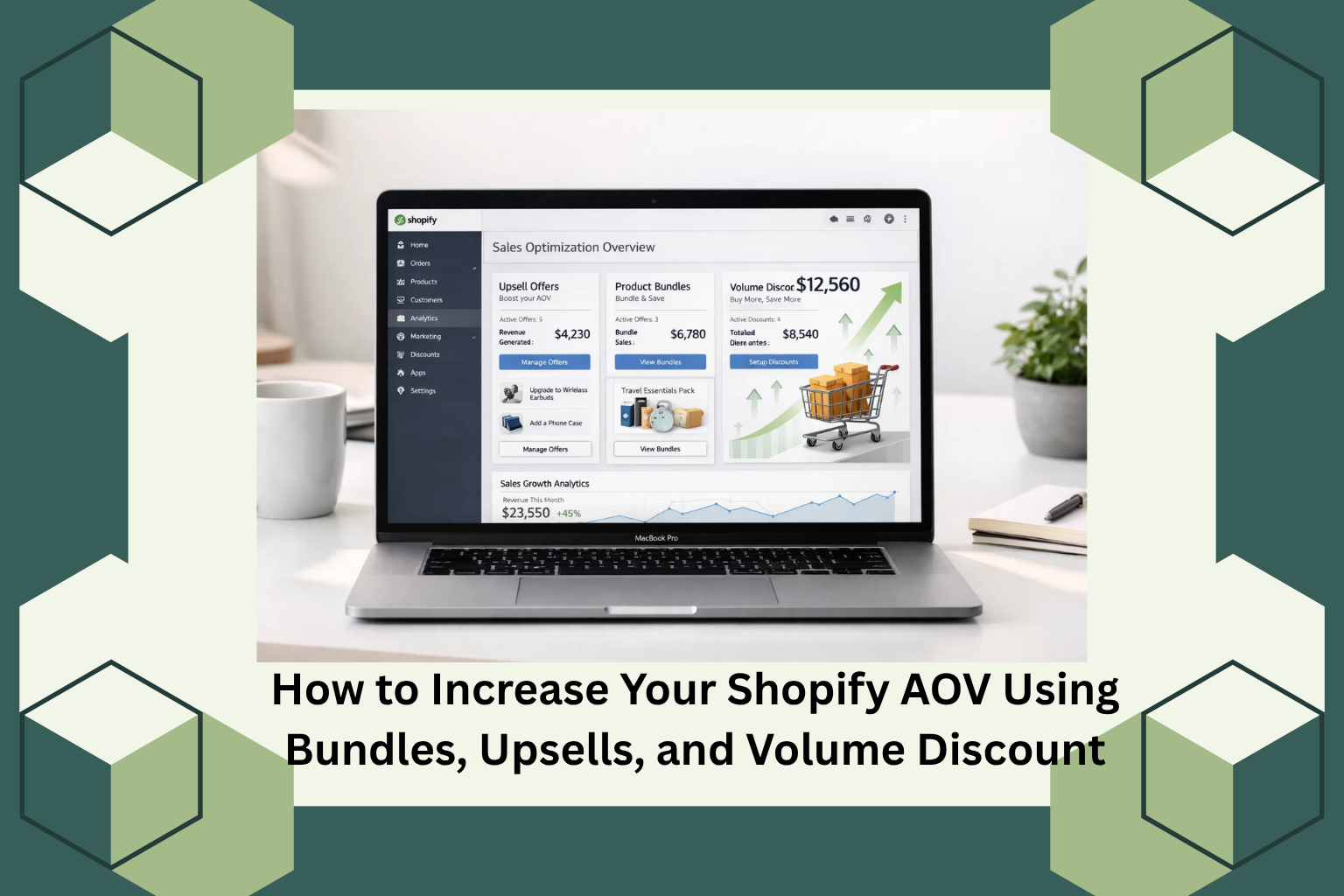
If you are trying to grow a Shopify store, it is very easy to fall into the same trap most people do.
You focus on traffic. More ads, more clicks, more visitors.
But after working on multiple stores over the years, I can tell you this clearly. Traffic is expensive. And it keeps getting more expensive every year.
What most stores ignore is what happens after the visitor lands on the product page.
That is where the real money is made.
Average order value, or AOV, is one of the most underrated growth levers in ecommerce. It simply measures how much each customer spends per order, but the impact goes far beyond that simple definition. When AOV increases, your revenue grows without increasing your acquisition cost. That means higher margins, more room to scale ads, and a more stable business overall.
I have seen stores go from struggling to profitable just by fixing how they present offers inside the buying journey. No redesign. No viral product. Just better structure.
Let’s break down how to do that in a way that actually works in the real world.
Understanding the Real Reason Customers Spend More
Before we talk about bundles or discounts, you need to understand one thing.
Customers do not spend more because you want them to.
They spend more because the offer makes sense to them in that moment.
That moment is everything.
When someone is about to buy, they are already in a decision state. Their trust is high, their intent is clear, and their resistance is lower than at any other point in the funnel. This is where small, relevant suggestions can significantly increase order value.
But most stores get this wrong. They either push random products or overload the page with too many offers. That creates friction instead of increasing value.
From experience, the stores that win do one thing differently. They guide the customer instead of selling to them.
That is the mindset you need as we go into the three core strategies.
Using Bundles to Increase Perceived Value Instead of Just Price
Bundles work because they shift how customers evaluate your product.
Instead of asking, “Is this one item worth it?” the customer starts thinking, “This whole set feels like a better deal.”
That psychological shift is powerful.
But not all bundles work. In fact, most fail because they are built around what the store wants to sell, not what the customer wants to buy together.
A strong bundle is built on natural compatibility.
If you sell skincare, a cleanser, serum, and moisturizer bundle makes sense because it mirrors a real routine. If you sell jewelry, pairing a necklace with matching earrings works because it completes a look. If you sell travel accessories, grouping items that solve one problem, like packing or organization, makes the decision easier.
The key insight here is that bundles reduce effort. The customer does not have to think through multiple decisions. You have already done that for them.
In one store I worked on, we replaced individual product listings with a “complete set” offer. The products were the same, but the presentation changed. Within a short period, AOV increased because customers naturally chose the bundle over single items.
Another important layer is pricing. The discount does not need to be aggressive. Even a small perceived saving can push the customer toward the bundle, especially if the convenience is clear.
So when you build bundles, do not think in terms of discounts first. Think in terms of usefulness. The discount is just the final nudge.
Upsells That Feel Helpful Instead of Pushy
Upselling has a bad reputation because most stores do it poorly.
You have probably seen it yourself. You add a product to cart, and suddenly you are shown five unrelated items that feel completely disconnected from your purchase. That does not increase AOV. It breaks trust.
A good upsell feels like a natural extension of the original purchase.
The easiest way to think about it is this. If your customer buys the main product, what is the one thing that would make that purchase better, easier, or more complete?
That is your upsell.
For example, if someone buys a smartwatch, offering an additional strap or screen protector makes sense. If someone buys a gift item, offering premium packaging or a message card fits naturally into their intent.
Timing also matters more than most people realize.
On the product page, upsells work best as upgrades. You are helping the customer choose a better version of what they already want.
Inside the cart, upsells work as complements. You are suggesting items that go well with the main product.
After checkout, upsells can be impulse-based because the purchase decision has already been made.
From testing, I have found that the simpler the upsell, the better it performs. One clear offer almost always outperforms multiple competing suggestions.
The goal is not to maximize exposure. It is to maximize acceptance.
Volume Discounts That Change Buying Behavior
Volume discounts work on a different level compared to bundles and upsells.
Instead of adding different products, they encourage customers to buy more of the same product.
This is especially effective for consumables, accessories, or products with repeat usage.
The reason this works is simple. It reframes the decision.
Instead of asking, “Should I buy this product?” the customer starts asking, “How many should I buy to get the best value?”
That shift increases quantity without increasing resistance.
But again, execution matters.
If the discount structure is confusing, customers will ignore it. If the savings are unclear, they will not feel motivated to increase quantity.
The most effective setups are simple and visible.
- Buy one at regular price.
- Buy two and save a small percentage.
- Buy three and save more.
This creates a natural progression that nudges the customer toward a higher quantity without forcing the decision.
In one case, a store selling everyday-use products implemented a tiered discount system. Most customers moved from buying one unit to buying two or three, not because they needed more immediately, but because the value made sense.
That is the key. The offer must feel rational, not forced.
Bringing It All Together Without Overwhelming the Customer
The real power comes when these strategies work together.
But this is also where many stores fail.
They try to do everything at once. Bundles, upsells, discounts, popups, banners. The result is a cluttered experience that reduces trust.
A better approach is to structure the journey.
- On the product page, guide the customer with a bundle or a clear upgrade.
- In the cart, introduce a single relevant add-on.
- At the pricing level, use volume discounts to encourage larger quantities.
Each step has a role. Each offer has a purpose.
When this is done correctly, the customer does not feel like they are being sold to. They feel like they are being guided toward a better purchase.
That is the difference between aggressive selling and smart ecommerce design.
Final Thoughts
Increasing AOV is not about tricks or tactics in isolation.
It is about understanding how customers make decisions and designing your store around that behavior.
Bundles reduce effort and increase perceived value.
Upsells enhance the original purchase when they are relevant.
Volume discounts encourage larger commitments by making the value clear.
When you align all three with customer intent, revenue growth becomes a natural outcome rather than a forced one.
Final Step: How AeroApps Helps You Turn Strategy into Revenue
Understanding strategy is one thing. Implementing it efficiently inside Shopify is another.
This is where AeroApps becomes genuinely useful.
Based on its product suite, AeroApps is designed to help Shopify store owners apply these exact AOV strategies without technical complexity.
With Aero Upsell and Bundle, you can create product bundles and show relevant add-ons directly on the product page. This allows you to guide customers toward higher-value purchases without disrupting their experience.
At the same time, the cart-based offer system lets you introduce targeted upsells at the right moment, when purchase intent is already high. Instead of guessing, you can control when and how offers appear.
For volume-based strategies, Aero Volume Booster gives you the ability to create tiered discounts, buy one get one offers, and cart-based incentives that encourage customers to increase quantity.
What makes this powerful is not just the features themselves, but how they work together inside one system. You are not stacking random apps. You are building a structured buying experience that increases AOV at every step.
If your goal is to grow your Shopify store without constantly increasing ad spend, this is one of the most practical ways to do it.

Leave a Reply